Production Software & System Architecture
Lunix POS
Behind a simple sale is an entire operating system for the store.
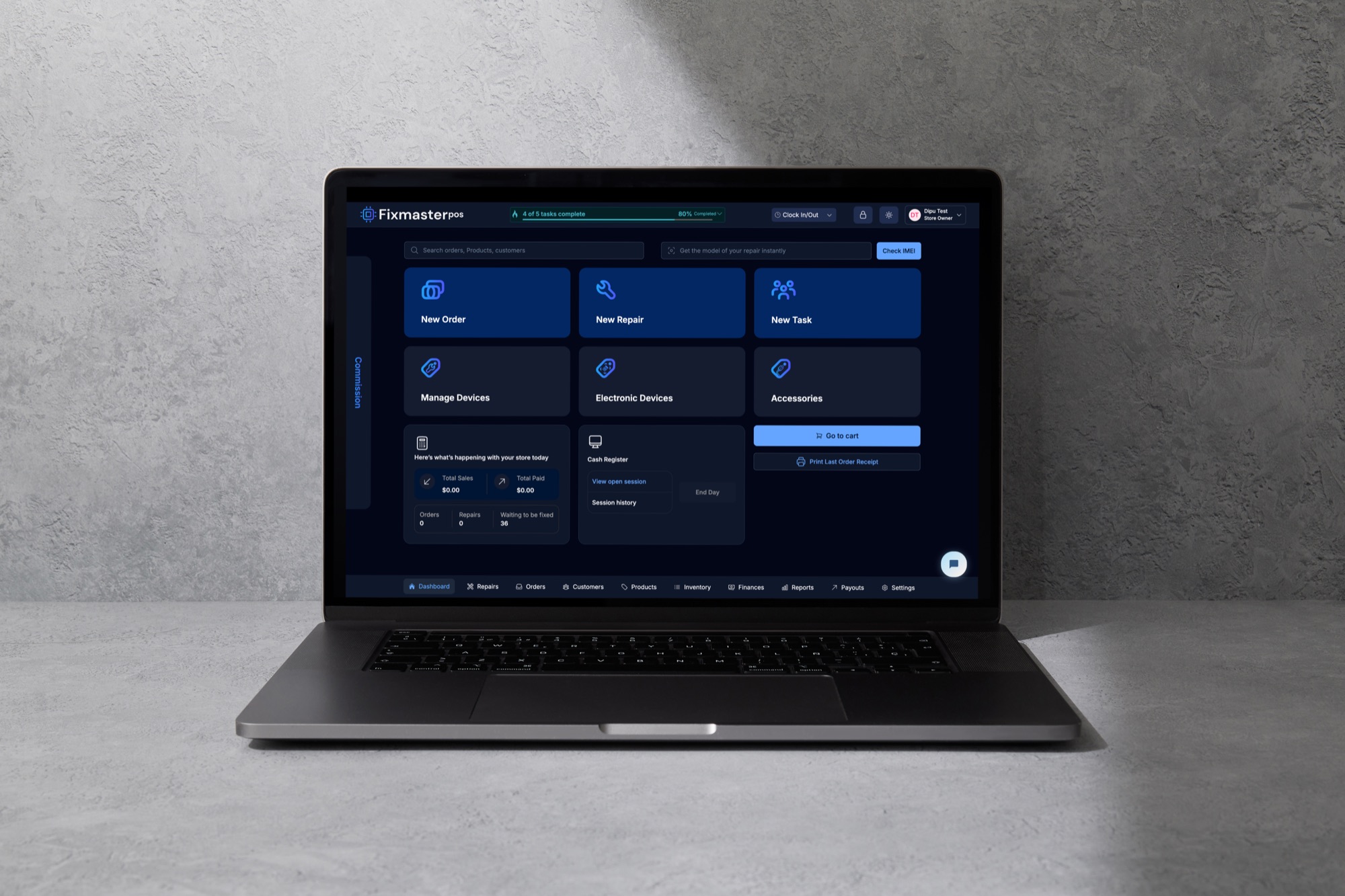
Lunix POS
May 2023 – Present
Node.js · TypeScript · MongoDB · AWS · Redis
The idea behind the build.
Retail and repair stores struggle with fragmented tools: inventory is separated from repairs, repairs are detached from customer billing, and checkout lags during peak concurrent store transactions. The client needed an all-in-one operating system that unifies connected retail and repair workflows into a responsive, real-time platform with zero margin for transaction error.
What I brought to it.
Core Backend Engineer & Database Architect. Designed and maintained the server-side architecture, engineered domain boundary models, optimized MongoDB aggregation pipelines for business reporting, and ensured fault-tolerant transaction handling across high concurrency.
The system
A full-scale cloud POS and store management suite managing everything from fast barcode scanning and cart calculation to repair lifecycle ticketing, multi-location inventory, purchase orders, accounts receivable aging, commission payouts, and hardware receipt/label printing.
The interesting challenge
Making independent business domains (orders, repairs, stock deduction, tax rules, and payments) execute atomically without locking or slowing down the point-of-sale checkout counter. Database modeling and indexing decisions affect how responsive checkout feels to a cashier.
Under the hood
- Multi-domain Node.js backend with domain-driven service separation
- High-performance MongoDB data models with compound indexes and memory-efficient schemas
- Real-time inventory deduction with optimistic concurrency controls
- Automated purchase order receiving with batch inventory updates
- Asynchronous reporting pipelines computing aging, tax liabilities, and store margins
- Role-based access control with 2FA, Passkeys, and IP allowlisting
What shipped
- Scalable backend engine sustaining heavy daily multi-store transaction volume
- Aggregation pipelines and indexes designed to improve business reporting
- Connected functional modules unified under clear API contracts
- Hardware-integrated printing endpoints for thermal receipts and barcode labels